


MURABAHA: Introduction
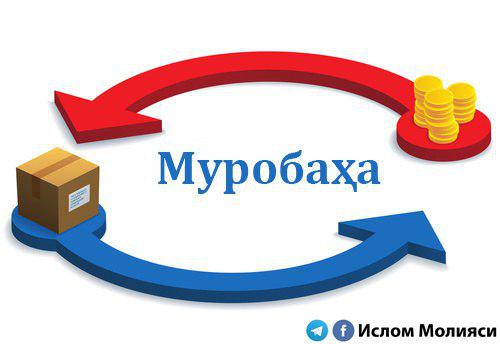
Murabahah is widely used today by Islamic financial institutions to finance entrepreneurial and commercial projects, even though murabahah was originally known in Islamic jurisprudence solely as a type of trade contract, with no connection to financing whatsoever.
Since Murabaha is, first and foremost, a sale transaction, we shall begin this article by examining the fundamental rules and principles governing Murabaha as a contract of sale.
Murabahah
- Murabahah is a special type of sale transaction in which the seller discloses to the buyer the purchase price of the product, the expenses incurred, and the markup (profit) added (if the seller does not disclose the cost and markup, then it is not murabahah but an ordinary sale transaction called "musawamah" in Islamic finance).
- All costs associated with delivering the product to the buyer are included in the cost price, and the markup is applied to the resulting figure (however, the seller's current expenses that are not directly related to delivering the product to the buyer are not taken into account when pricing the product).
- The parties may agree on either immediate payment or deferred payment (i.e., within a specified period). Therefore, it would be incorrect to refer to murabahah solely as a deferred-payment sale transaction (only those who are not well-versed in Islamic law and are only familiar with the activities of modern Islamic financial institutions think so).
- A murabahah contract is legally valid only when the price of the product is precisely known. Otherwise, the product cannot be sold through a murabahah contract (in that case, it would not be murabahah but musawamah, an ordinary sale transaction).
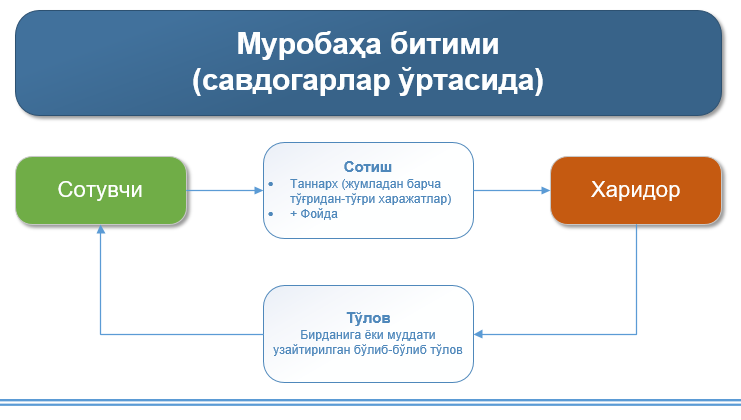
Examples:
- A seller purchased a mobile phone for $100 and wishes to sell it through a murabahah contract with a 10% markup. Since the product's price is precisely known, the murabahah transaction is permissible.
- A seller purchased a mobile phone and a digital camera for $200 combined. In this case, he may sell both items together in a single murabahah contract, but he cannot sell the mobile phone alone through murabahah, since its individual cost is not precisely known. If the seller wishes to sell the mobile phone by itself, he may do so through an ordinary sale transaction (i.e., without disclosing the cost, expenses, and markup/profit).
Source: islommoliyasi.uz