


Research & Articles
Categories

Business Ethics
Yesterday, I was talking with a young man who runs a rented shop. He mentioned that due to the coronavirus, sales have decreased, and it would be good if the shop owner understood the situation, as collecting rent these days is difficult. He said it would be a good deed if the owner could provide some relief or deferment until the situation improves...

The Human and Social Significance of Zakat
Zakat, which is one of the pillars of the religion of Islam, is an act prescribed by Allah for His servants. Zakat is not a personal charity or voluntary generosity, but a mandatory financial worship prescribed by Allah for the wealthy.
Zakat, Fitr, and Fidyah: What? How much? To whom?
As is known, during the month of Ramadan, primarily three types of financial worship are performed. These are Zakat, Fidyah, and Fitr. Below we provide information about these acts of worship once again.

Paying Zakat in Advance
According to the majority of scholars, to alleviate the current coronavirus crisis, Zakat may be paid before its due date (although some scholars have set additional conditions, the Messenger of Allah (peace be upon him) permitted Abbas (may Allah be pleased with him) to pay Zakat in advance (narrated by Tirmidhi).
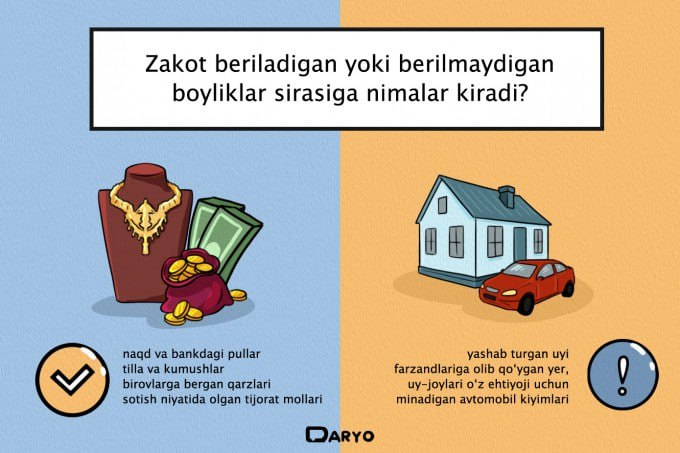
What is Zakat? What is its amount and why is it given only in Ramadan?
Whenever the month of Ramadan arrives, people begin to ask: "Is Zakat obligatory on all Muslims, what is its amount, who is eligible to receive Zakat? How much money should I give? How do I calculate the Nisab of my wealth?"

Introduction to the Concept of Waqf
Dear page members, starting today we will introduce you to Islamic social finance products. Previously, we presented several articles and information about Zakat and Fitr Sadaqah, which are core Islamic social products, through our page and website. Now we will begin introducing Waqf, another important Islamic social finance product.

Introduction to Mudarabah
Allah Almighty, in His wisdom and justice, has distributed talent and wealth among people. In our society, there are many experts in their fields, people of intelligence, experience, and knowledge, and also there are owners of wealth who do not have the opportunity to implement a particular business project due to lack of experience, time constraints, not being a specialist in a specific field, or some other reason.

Concept of Musharakah
When discussing Islamic finance, the term MUSHAARAKAH is primarily used in relation to financing. The term "Musharakah" is derived from the root "Shirkah". The term "Shirkah" is widely used in Islamic jurisprudence and has a broader meaning than "Musharakah". Below we will examine the meaning of these basic concepts.

Murabahah: An Introduction
Murabahah is widely used today by Islamic financial institutions to finance business/commercial projects, although initially Murabahah was known in Islamic jurisprudence only as a type of sales contract and had no connection to financing at all.

Istisna' Contract
Another type of contract/commerce, like the Salam contract, where the sale of a product is conducted before it comes into existence, is called Istisna'. In this contract, the customer/buyer places an order with a manufacturing (or construction) company to produce a specific product (or build a structure).

Salam Transaction
Salam transaction is the sale of deferred goods for spot price, or the sale of an obligation for spot price. That is, the price of the goods is paid in advance, and the goods are received later within a specified period.

Ijarah: An Introduction
"Ijarah" is a term related to Islamic jurisprudence, and its linguistic meaning is "to rent something". In Islamic jurisprudence, the term "Ijarah" is used in two contexts. Firstly, it means "using the services of a person hired for wages".

Classification of Sukuk
Similarities can be observed among different types of sukuk. The differences become clearly evident in their operational mechanisms. A comparative analysis of each type provides a clearer understanding of the distinctions between these uniquely structured certificates (Table 1).
What is Takaful?
All types of human activities are not immune to various losses and risks arising from unforeseen events. The efforts of individuals and companies to protect themselves from unexpected circumstances are not only considered natural but also a process in accordance with Shariah.